When Halloween Comes Calling: Behind the Costumes for TK Maxx
Four characters. One very quick turnaround. A lot of black fabric. Welcome to Halloween at The Style Spot.
There are some emails that land in my inbox and immediately make me think: Oh, this is going to be fun.
A Halloween campaign for TK Maxx, featuring four recognisable spooky characters wandering around a shopping centre? Yes please.
The brief was to research, design and style four character looks for a series of fun social films — but there was a catch.
They needed to feel familiar enough that you immediately understood the reference, without being direct replicas of any existing character.
Which, from a costume-design perspective, is actually where things get really interesting.
The Art of Almost Recognisable
When you’re recreating a historical figure, there are photographs, paintings and references to work from. When you’re designing an original character, you can essentially create your own visual language.
This job sat somewhere wonderfully awkward in the middle.
The audience needed to look at each character and think, “Oh, I know exactly what you’re doing there…” — while the costumes themselves needed enough distance from their original inspiration to become something new.
So rather than thinking about individual garments, I started by breaking each character down into their visual codes.
What actually makes us recognise somebody?
Is it colour? Silhouette? Hair? Proportion? Texture? A particular combination of pieces?
And, crucially, which of those ingredients can you change before the character stops reading altogether?
That became the basis of my initial research and design boards.
Designing the Gang
We had four very different personalities to create, so I wanted each one to have their own design language while still feeling like they belonged in the same slightly bonkers Halloween universe.
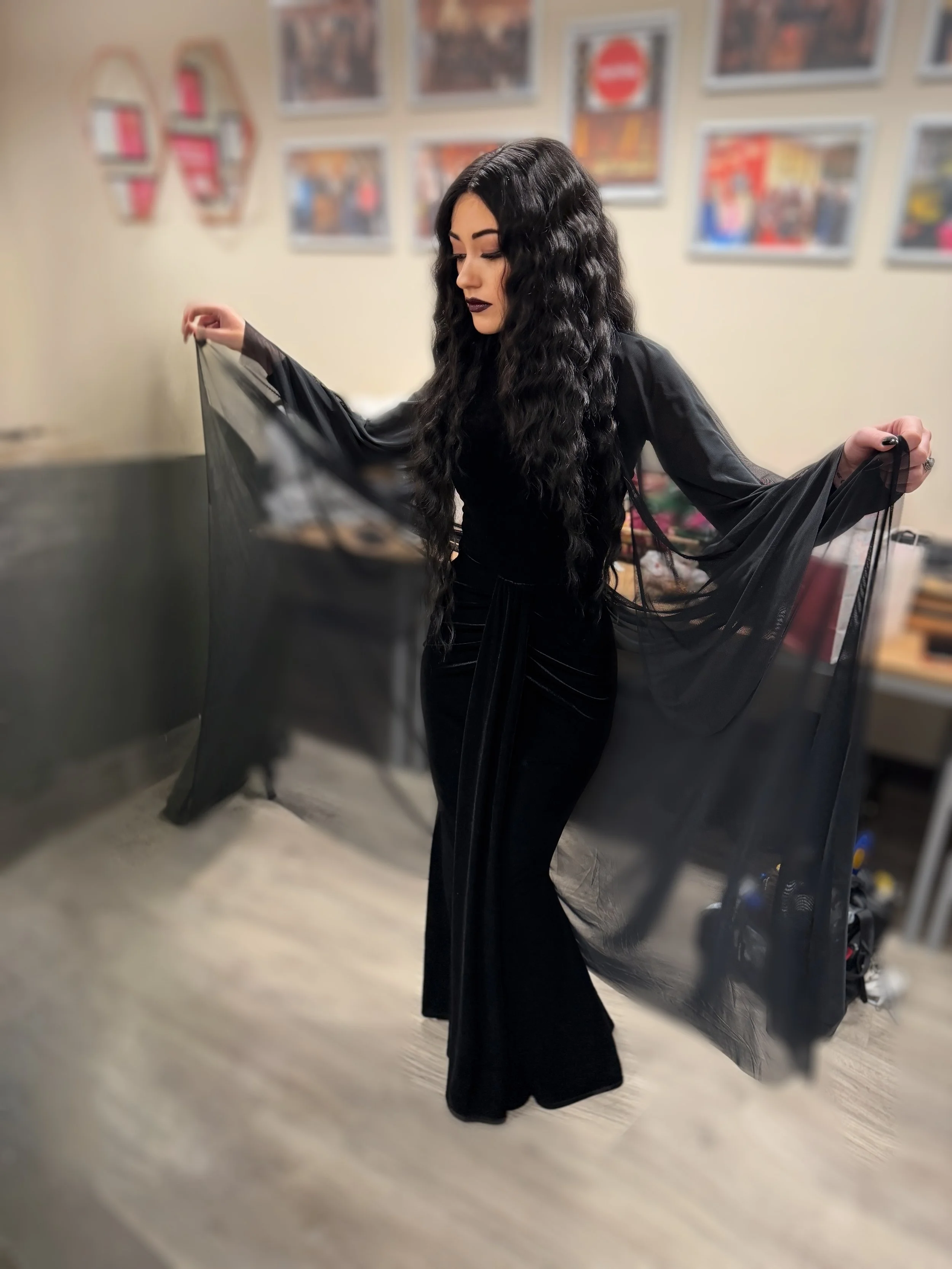
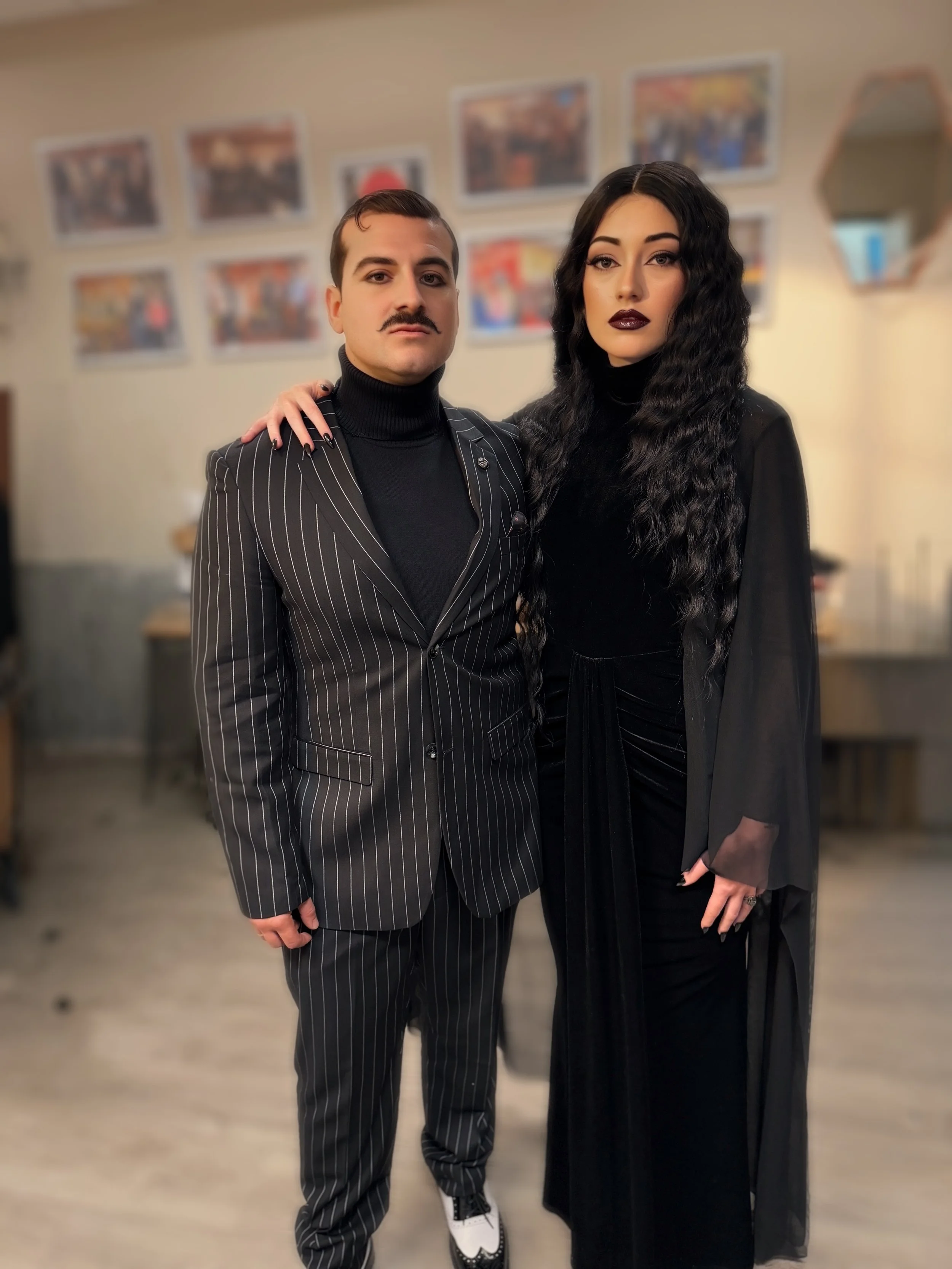
For our gothic leading lady, it was all about length, movement and drama.
Rather than simply reproducing a familiar black dress, I concentrated on silhouette and texture. A fitted velvet base created that long, elegant line, while huge sheer draped sleeves brought movement to the costume — particularly important when you know somebody is going to be walking through a shopping centre and filmed from multiple angles.
And then there was the hair.
Long. Black. Wavy. Enormous.
Subtle, we were not.
For her sharply dressed counterpart, I wanted to retain that beautifully macabre formality while moving the tailoring away from anything too directly recognisable.
We landed on a much sharper pinstripe suit, worn over a black roll neck, with monochrome shoes and some carefully chosen details. It still gives you that slightly eccentric, old-school gentleman energy, but through a much more contemporary fashion lens.
That is often the sweet spot with an homage: preserve the attitude, change the clothes.
Building a Monster
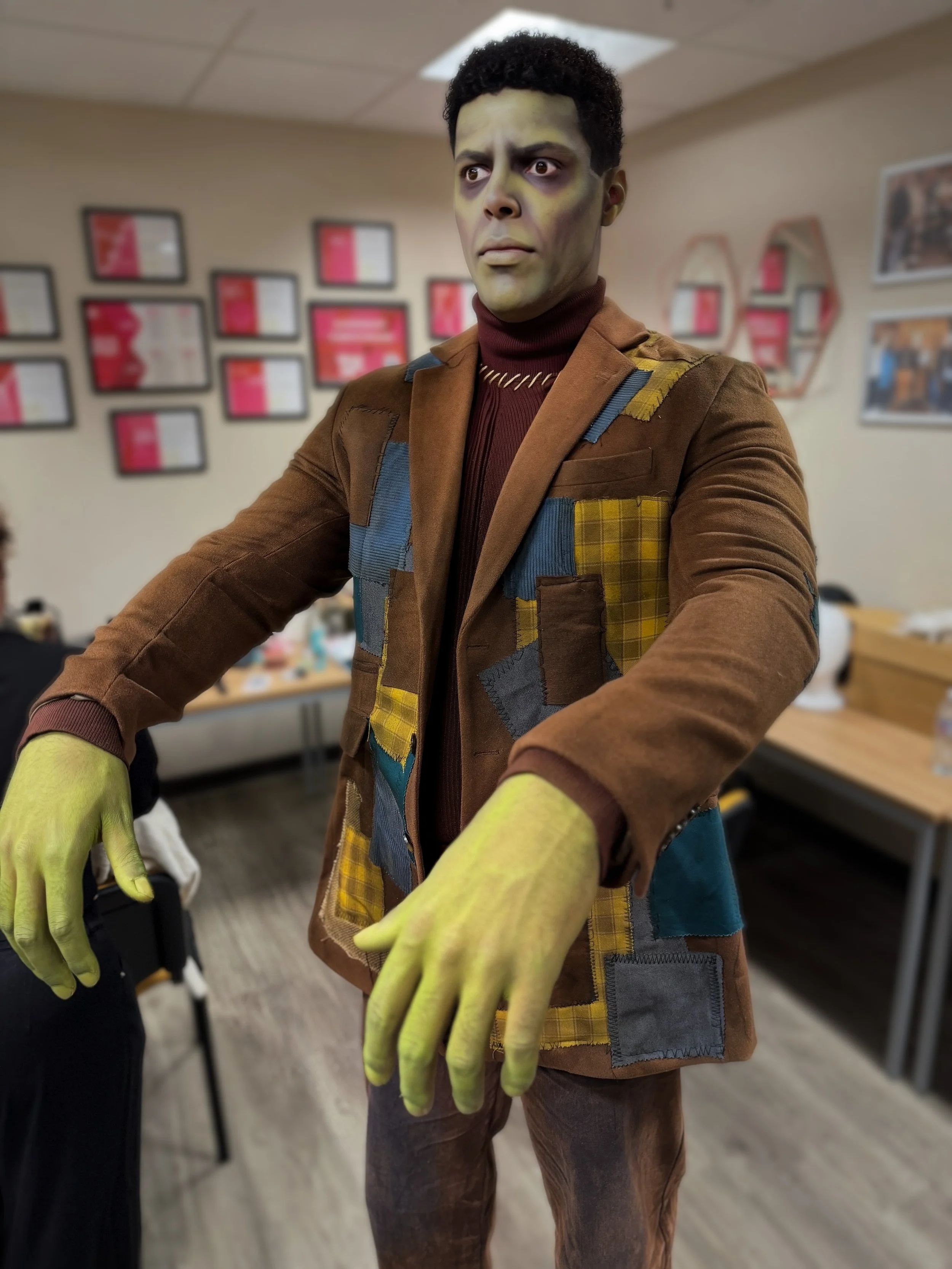
This might have been my favourite make of the project.
The starting point was a brown suit.
The finishing point was… considerably less normal.
I wanted our monster to feel as though his clothes had almost been constructed in the same way as he had — pieced together from different parts.
So I took the suit and began patchworking directly onto it.
Corduroys, checks, twills and contrasting fabrics were cut into irregular shapes and applied across the jacket, deliberately exposing stitching and allowing some edges to feel imperfect. I continued the treatment across the costume so it didn’t look like a pristine suit with a few decorative patches stuck on top.
Underneath, I used a deep burgundy roll neck and added hand stitching around the neckline, almost suggesting another seam holding everything together.
It became this wonderfully tactile mixture of tailoring and Frankenstein-ed fashion — without needing to recreate a specific movie costume.
Which, incidentally, is exactly the kind of sentence that makes me realise I have a very strange job.
And Then There Was a Witch…
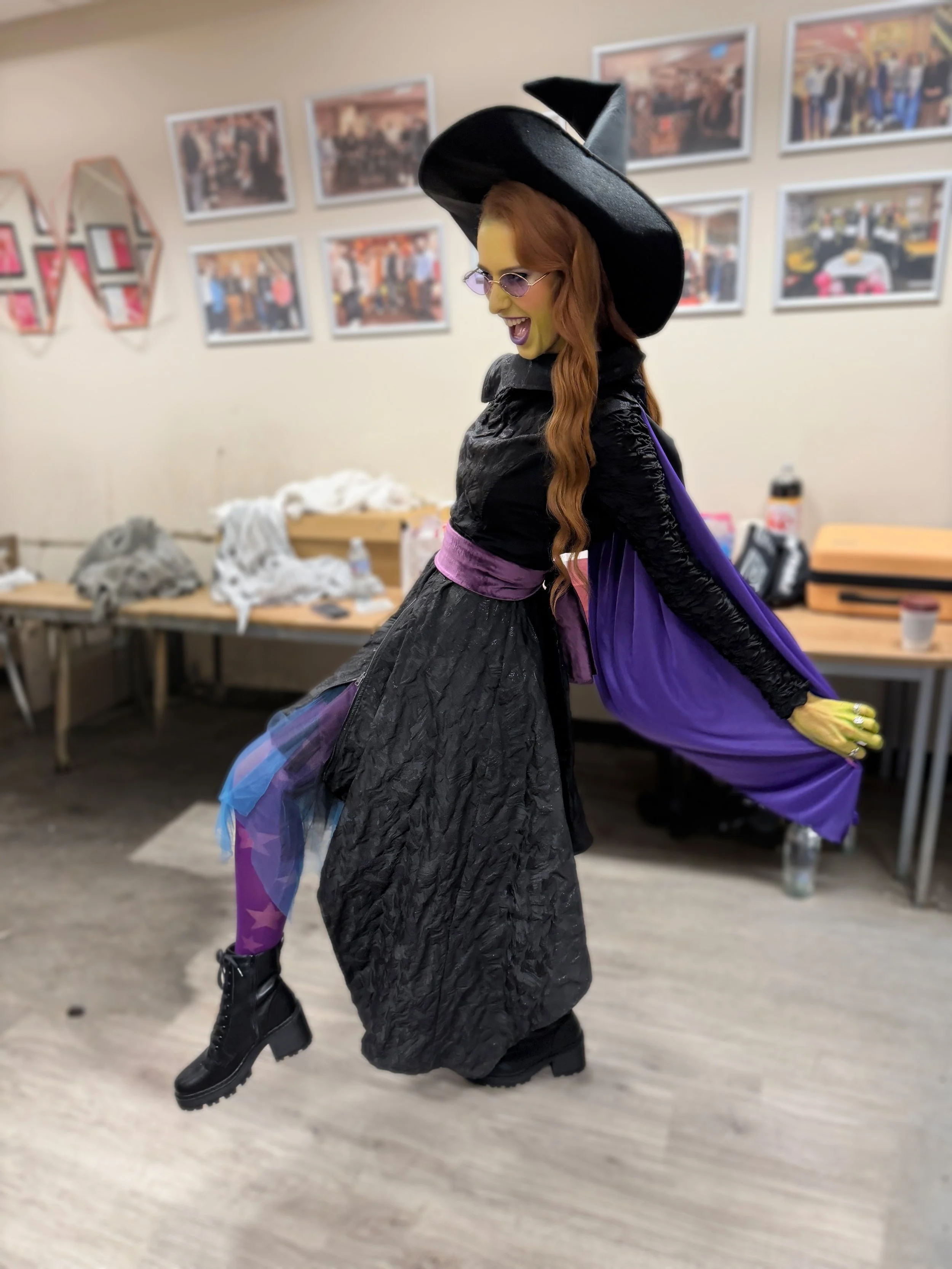
With the witch look, I wanted to avoid falling straight into generic Halloween fancy dress.
Because there is a very fine line between fashion witch and £19.99 costume-in-a-plastic-bag witch.
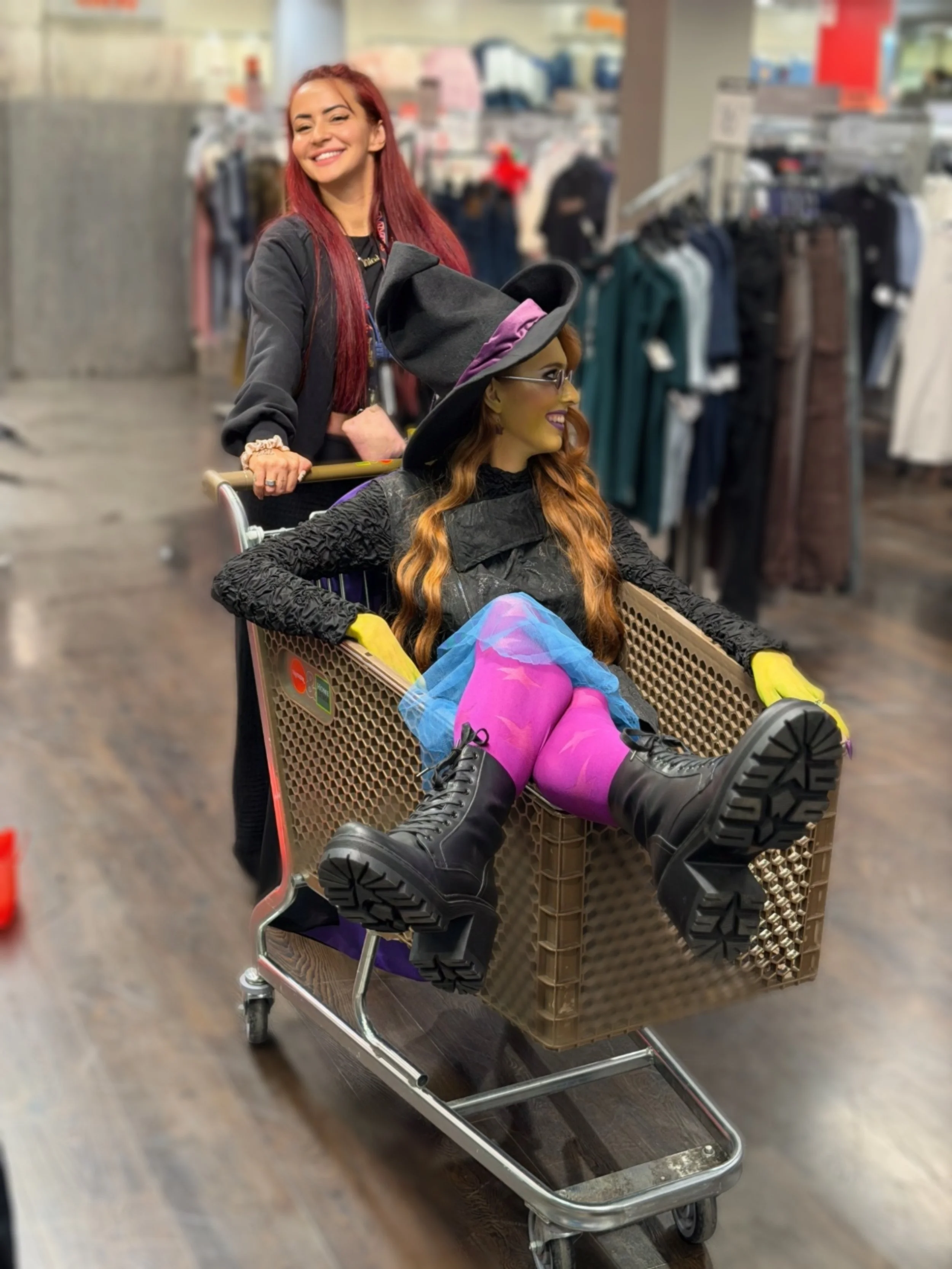
We kept the unmistakable oversized pointed hat(I added a wire inside the hat, so we could create shape & angles), but everything underneath became much more layered and playful.
A textured black dress formed the base, with a purple sash, flashes of coloured tulle underneath, heavy boots and a beautifully dramatic purple-lined cape.
Then came one of my favourite additions: tiny tinted glasses.
Suddenly she wasn’t just a witch.
She was a witch who perhaps had somewhere fabulous to be afterwards.
And I loved her for it.
Wigs, Make-up and the Magic of Collaboration
Costume never exists completely on its own.
Hair and make-up can fundamentally change how a costume reads, particularly when you’re working with characters whose silhouettes are so closely connected to their hair.
It’s one of those behind-the-scenes details audiences rarely think about. It’s very much a creative collaboration. In this case, I created look boards & designs then consulted with Roseanne the makeup designer to make sure we were on the same page.
Character work is nearly always a team sport.
The Glamour of a Quick Turnaround
Now, I would love to tell you that all of this happened during several leisurely weeks of fittings, fabric shopping and thoughtful experimentation.
It did not.
The final character approvals and casting came through incredibly close to the shoot, which meant going from design boards into sourcing, hiring, buying, altering, making and wig prep at speed.
And that’s the slightly less glamorous side of commercial costume design.
Sometimes the creative part isn’t simply coming up with a good idea.
It’s coming up with a good idea that can actually exist by Thursday.
You learn very quickly to design with one part of your brain asking “Wouldn’t this look amazing?” and another part asking “Can I physically get the fabric, make it, fit it and have it camera-ready in time?”
Both voices are important.
From Mood Board to Filming
And then suddenly you’re standing backstage in a TKMaxx in Hammersmith surrounded by wigs, make-up, green hands, metres of black chiffon and a heavily patch-worked brown suit thinking:
Oh good. They actually look like the drawings.
There is always something particularly satisfying about seeing characters leave the research board and become real people.
Because that’s the bit I love most about costume design.
Research gives you the foundations. Design gives you the idea. Making gives it texture. Styling gives it personality.
But it’s only once somebody puts everything on that the character really arrives.
And these four certainly arrived.
The finished campaign is now out in the world, and it’s been brilliant seeing the response to our strange little Halloween gang.
For me, though, some of my favourite images will always be these behind-the-scenes ones — slightly chaotic dressing rooms, half-finished transformations and those few moments when you can see all the separate pieces suddenly become a character. (Behind the scenes images below - enjoy!)
That’s where the magic really happens.
Until the next adventure…
Stay in the Spot.