
From working-class beginnings to building a creative career. How a chance opportunity at the BBC helped change my life, the lessons I've learnt along the way, and why I wrote So You Want to Work in Costume?
There's something quite wonderful about looking back at where you started.
Not because everything went according to plan (believe me, it didn't!), but because sometimes you realise just how far a little determination, a lot of hard work and a slightly ridiculous amount of ambition can take you.
When I was younger, I knew I wanted to do something creative. I didn't necessarily know what that looked like, how I would get there or even whether it was something someone like me could realistically achieve.
I came from a working-class family. I didn't have connections in television, film or fashion. There wasn't a family friend who could make a phone call, a helpful introduction waiting in the wings or a ready-made route into the industry.
What I did have was imagination, determination and an overwhelming desire to create things.
And, as it turns out, that was a pretty good place to start.
A LITTLE DIFFERENT FROM THE BEGINNING
I've always loved storytelling through clothes.
The characters, the personalities, the theatricality of it all. The idea that something as simple as a costume could completely transform the way someone looks, moves or feels has always fascinated me.
I went on to study fashion, but even then, I found myself drawn towards something a little different.
While the traditional route would have been to produce a fashion show for my final collection, I decided to create a puppet installation instead.
Yes, puppets!
I designed and built an installation featuring characters dressed in custom-made theatrical outfits. It was unconventional, a little eccentric and probably not what everyone expected from a fashion student.
But it was me.
Looking back, I think that project said an awful lot about the direction my career would eventually take. I wasn't particularly interested in simply designing clothes for clothes' sake. I wanted to create characters, tell stories and build worlds.
I didn't fully realise it at the time, but I was already finding my own creative voice.
And that's something I've carried with me ever since: trust your instincts, even when they're taking you somewhere a little unexpected.
GETTING MY FOOT IN THE DOOR
One of the biggest challenges when you're starting out in a creative industry is simply figuring out how to get in.
You can have the enthusiasm, the talent and the ambition, but without knowing where to begin, it can feel like everyone else has been given a secret handbook that you've somehow missed.
I certainly felt that way.
After finishing my foundation degree, I had a place waiting for me to study a BA in Fashion Design. On paper, it seemed like the obvious next step. But something didn't feel quite right.
I'd been working in a bar every Friday, Saturday and Sunday night throughout my studies, which had allowed me to save a little money. So rather than rushing into another three years of education, I decided to take a gap year and figure things out.
I headed off to the USA with some friends, travelled a little, had a wonderful time and enjoyed a bit of self-discovery along the way.
But when I returned home, I was still a little unsure of what came next.
And then, rather unexpectedly, an opportunity presented itself.
A friend from college had been interning at a small production company and had been offered the chance to apply for a four-week work experience placement in the children's department at the BBC.
She didn't want to pursue it and suggested I apply instead.
So I did.
And I got it!
I was absolutely thrilled.
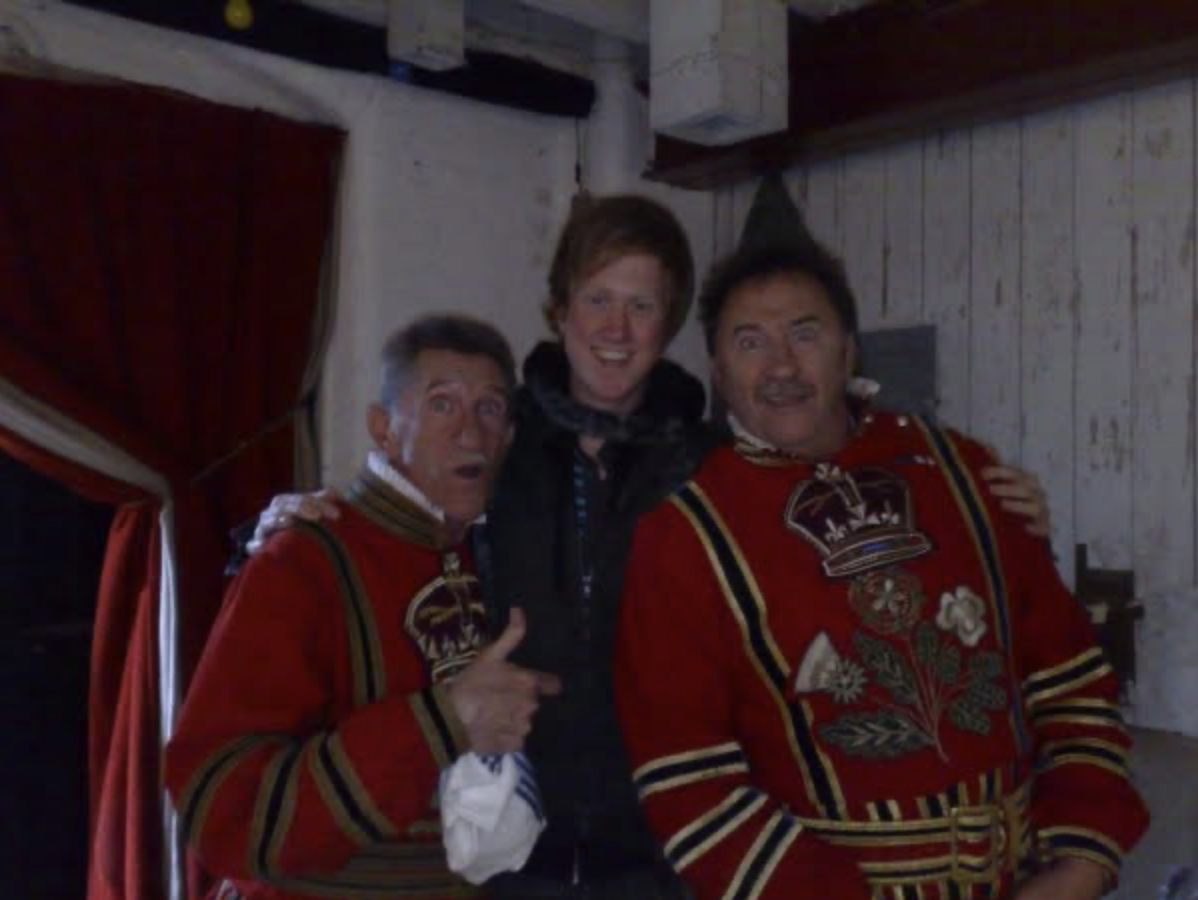
I still remember the day I signed in and collected my BBC pass. It might have been a small moment to everyone else, but to me it felt enormous.
Suddenly, I was walking through the doors of a place I'd only ever seen on television, surrounded by the people who made it all happen.
I didn't know it then, but that little four-week placement would change the direction of my life.
The placement was on a children's television show called Trapped!, and what was originally supposed to be four weeks turned into Six.
I spent time assisting across the art department, costume department and production, getting a glimpse into all the different elements that go into making a television programme.
It was intense, exciting, occasionally chaotic and completely wonderful.
I loved every minute of it.
Well, perhaps not every minute. It was hard work!
And while all this was happening, I was still working behind the bar at weekends because, quite simply, I needed the money.
Then, at the end of my placement, something extraordinary happened.
They offered me the opportunity to stay on in what was essentially a loose apprenticeship.
I'd be learning on the job, gaining experience and, importantly, getting paid. Not very much, admittedly, but paid nonetheless!
There was just one rather big decision to make.
Accepting the opportunity meant turning down my university place.
It was nerve-racking. I'd spent years following the education route, and suddenly I was being offered something completely different.
But my gut was telling me to take it.
So I did.
And I'm so pleased I trusted that instinct.
A LITTLE BBC MAGIC
I stayed on at the BBC, learning my craft, gaining experience and absorbing as much as I possibly could.
And what an extraordinary place it was to learn.
At the time, the BBC still had an incredible in-house production infrastructure. Costume, makeup, scenery, props — all these departments working together to bring productions to life.
The studios were buzzing, productions were happening all around us, and you never quite knew who you might bump into around the next corner.
Stars, presenters, performers, designers, technicians. There was something happening everywhere.
To a young creative just starting out, it was absolute magic.
I feel incredibly fortunate to have experienced that era of the BBC. As the organisation began restructuring and moving away from so much of its traditional in-house production model, I realised I'd been given a glimpse into a world that was already beginning to change.
It was an extraordinary education.
I learnt about the practical realities of working in costume, the importance of preparation, the pace of production, working with different departments and the extraordinary amount of teamwork that goes into creating what audiences eventually see on screen.
It wasn't always glamorous. In fact, much of costume work isn't!
But I was learning from people with years of experience, developing my skills and beginning to understand how the industry really worked.
That experience was invaluable.
And it taught me something that I still believe today.
You don't have to know everything when you start. You just have to be willing to learn.
TWO JOBS, BIG DREAMS
There's another part of this story that I think is important to talk about.
Money.
Not particularly glamorous, I know, but rather essential when you're trying to build a career and pay your bills.
I sometimes think we talk about breaking into the creative industries as though everyone starts from the same place.
But they don't.
For some people, an unpaid placement is an exciting opportunity. For others, it's a financial impossibility.
Not everyone has parents who can support them financially while they find their feet. Not everyone has industry contacts, a safety net or the luxury of waiting around for the perfect opportunity.
I certainly didn't.
Working behind a bar alongside my studies and those early days at the BBC wasn't simply about earning a bit of extra spending money. It was how I supported myself while trying to make something of my ambitions.
There were long days, late nights, plenty of juggling and moments when I'm sure a more conventional career might have seemed like the sensible option.
But I knew what I wanted.
I wanted to work in costume. I wanted to be creative. I wanted to build something that was mine.
And I was determined to find a way.
I think it's important to acknowledge that hard work alone doesn't guarantee opportunity. Luck, timing and access all play their part, and I was incredibly fortunate that my friend passed that BBC opportunity my way.
But when it arrived, I was ready to give it everything I had.
And perhaps that's one of the biggest lessons I've learnt.
You can't always control which doors open for you, but you can prepare yourself to make the most of them when they do.
Those early experiences taught me resilience, resourcefulness, determination and the value of hard work.
Qualities that have proved just as important as any creative skill.

TAKING THE LEAP
Eventually, my journey took me beyond the BBC and into the world of freelance work.
And anyone who has ever been self-employed will know that it's a whole new education in itself!
Suddenly, you're not just responsible for your creative work. You're responsible for finding clients, managing budgets, negotiating fees, building relationships, organising schedules, handling invoices and generally keeping the whole show on the road.
There's no handbook for that either.
You have to learn to wear an awful lot of hats.
And believe me, some of them fit better than others!
Over time, I established my own company, Patrick Jack Designs, and began building a client base.
What started with an ambition to work creatively has grown into a career spanning television, film, commercials, entertainment, styling and character design.
I've had the opportunity to work with celebrities, production companies, international studios, major brands and corporate clients from around the world.
I've created costumes, styled talent, developed characters and worked alongside some extraordinarily talented people.
There have been wonderful opportunities, exciting challenges, moments of complete creative chaos and more than a few late nights!
And I still get excited about the work.
I still love walking into a studio. I still love seeing a design come to life. I still get that little buzz when a costume finally comes together and a character suddenly feels real.
Because underneath all the business meetings, budgets, schedules and emails, I'm still that person who just loves making things.
And I hope I always will be.
WHAT I'VE LEARNT ALONG THE WAY
If there's one thing my career has taught me, it's that there isn't one correct way to succeed in the creative industries.
Some people study costume. Some study fashion. Others come through theatre, art, textiles or completely unrelated backgrounds.
Some find their way through work experience, others through assisting, making, styling or simply being brave enough to introduce themselves.
There is no single route.
But there are a few things I believe make a real difference.
Work hard, but work smart. Being busy doesn't necessarily mean you're moving forward. Learn to recognise the opportunities that will help you grow.
Be someone people want to work with. Talent is important, of course, but so are kindness, reliability, communication and being a good team player.
Keep learning. The industry changes constantly, and there's always something new to discover, whether you're just starting out or have been working for years.
Trust your gut. Some of the best decisions I've made haven't necessarily been the most obvious ones. Sometimes you have to follow what feels right for you.
Find your own voice. Don't spend your entire career trying to be somebody else. Your individuality is one of the most valuable things you have.
Don't be afraid to ask questions. Nobody knows everything, and some of the most valuable things I've learnt have come from simply being curious.
And perhaps most importantly...
Do your best, back yourself and don't be afraid to take up space.
You don't need to come from the right family, know the right people or have everything figured out before you begin.
You do need to be prepared to put the work in, be persistent and keep showing up.
And even then, there will be setbacks. That's part of it.
The important thing is not to let them convince you that you don't belong.

SO, WHY DID I WRITE AN E-BOOK?
When I think about why I wanted to write this book, I keep coming back to that younger version of myself.
The one who didn't know anyone in the industry, who was working weekends behind a bar, who had absolutely no idea where his career might lead.
I wonder how much easier those early days might have felt if I'd had someone to explain how it all worked.
Not to hand me a career on a plate, but simply to offer some guidance, answer a few questions and reassure me that there was a place for someone like me.
Because I remember having so many questions.
How do you find work experience? What should go into a portfolio? Do you need a degree? How do you approach people? What should you charge? How does freelance work actually work?
And perhaps the biggest question of all...
Where on earth do I begin?
Over the years, I've been asked these questions countless times by students, graduates and people hoping to break into the costume industry.
And I realised that I wanted to create something useful.
Something approachable, practical and honest.
Not a complicated academic textbook or a promise that following a few simple steps will magically land you your dream job.
But a guide that shares some of the knowledge and experience I've gathered throughout my career.
The sort of advice I would have loved to have had when I was younger.
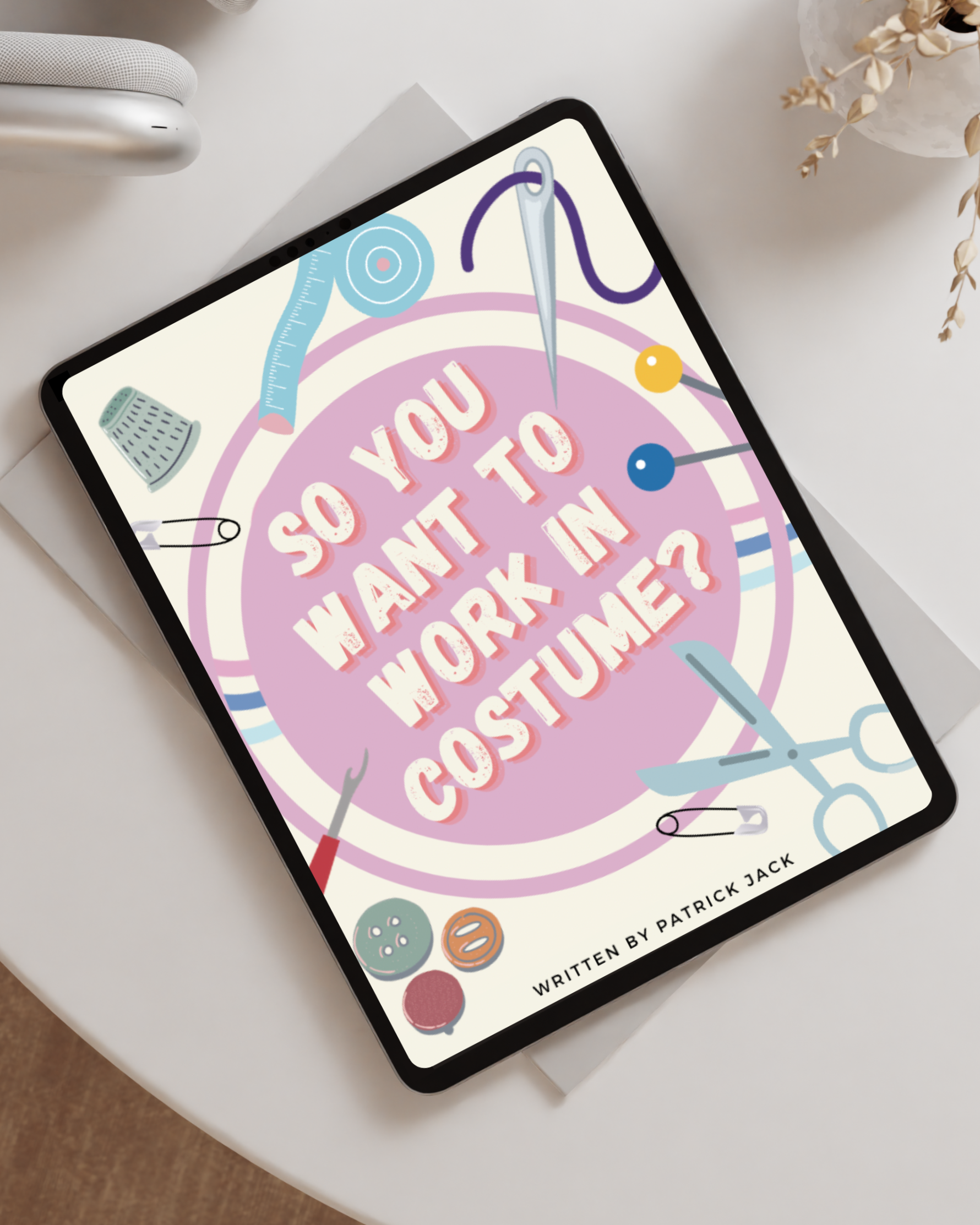
And that's how So You Want to Work in Costume? came about.
22 CHAPTERS OF PRACTICAL ADVICE
The e-book covers everything from those first tentative steps into the industry to some of the practical realities of building and maintaining a creative career.
We explore:
Getting started and finding the right route into costume
Education, skills and building your portfolio
Making contacts and finding opportunities
Understanding the different roles within the industry
Freelancing, employment and rates of pay
Building experience and finding your niche
The design process, moodboards and sourcing
Budgets, teamwork and the practical side of production
Keeping your career moving forward
It's designed for students, recent graduates, career changers and anyone who's ever watched the credits roll at the end of a film or television programme and thought...
I'd love to do that.
Whether your dream is to design elaborate period costumes, work backstage in theatre, style television personalities or create extraordinary characters for the screen, I hope this book helps you understand a little more about the possibilities.
And, more importantly, gives you the confidence to explore them.
Because sometimes, knowing where to start is the hardest part.
YOUR STORY IS JUST BEGINNING
When I think back to that younger version of myself, creating theatrical costumes for puppets instead of putting on a fashion show, I wonder what he'd think of everything that's happened since.
I don't think he'd have believed half of it.
But I think he'd be pleased that I kept going.
I'm proud of the career I've built, not simply because of the clients I've worked with or the projects I've been involved in, but because I know what it took to get here.
The hard work. The sacrifices. The uncertainty. The determination to keep moving forward even when I wasn't entirely sure where the road was leading.
And I want other people to know that their beginnings don't have to define their possibilities.
The creative industries can be challenging, competitive and sometimes difficult to navigate.
But they're also full of extraordinary people, wonderful opportunities and the chance to make a living doing something you genuinely love.
So if you're sitting there wondering whether a career in costume might be for you, my advice is simple.
Be curious. Ask questions. Make things. Meet people. Keep learning.
Don't wait until you feel completely ready.
And above all, don't underestimate what you might be capable of.
You never know where that first little opportunity might lead.
Mine happened to be a two-week placement at the BBC.
And look where that led.
READY TO GET STARTED?
My e-book, So You Want to Work in Costume?, is available to download now.
Packed with 22 chapters of practical advice, industry insight and a little encouragement from someone who's been there, it's designed to help you take those first steps towards a career in costume.
GET YOUR COPY OF SO YOU WANT TO WORK IN COSTUME?
And if you're looking for a little more personal guidance, I also offer First Foot in the Door, a one-to-one online mentoring session for current students and recent graduates, where we can talk through your ambitions, your portfolio and your next steps.
Because sometimes all it takes is a little advice, a bit of encouragement and someone willing to point you in the right direction.
Here's to the next generation of costume creatives.
I can't wait to see what you create.
Stay in the Spot!
Px 💗
